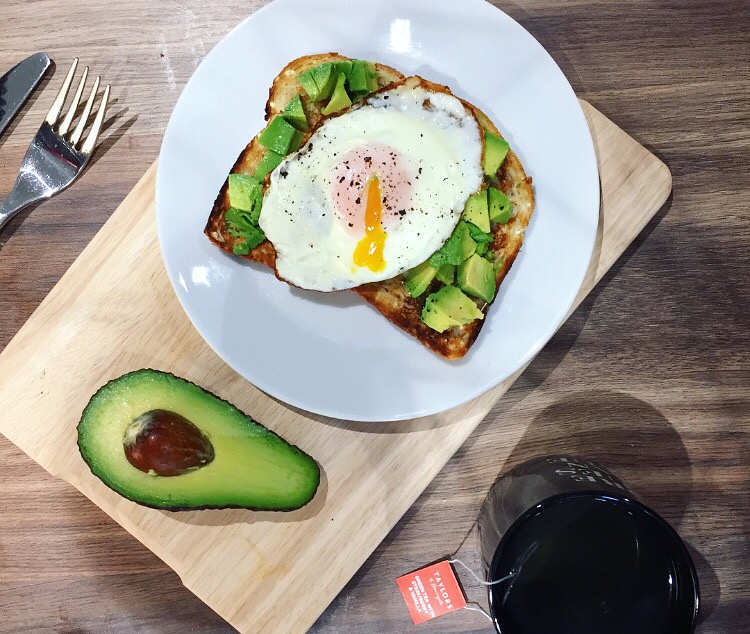
So you’ve heard this term ‘macros’ being thrown around by endless fitness accounts, gym goers, and protein bar lovers, but what are they, and what do they mean???
Essentially, tracking your macros is paying attention to the nutritional information in the foods you eat, and not just the calorie content.
Calories are still important, and are the basis of any weight manipulation. You need to be in a calorific deficit – eating less calories than you are burning in a day (remember your body is likely to burn well over 1000 calories just by being alive, I’m not talking purely through exercise)- to lose weight, and a calorific surplus – eating more calories than you are burning to gain weight, or to try and gain muscle more quickly, common sense really!
If the goal is purely ‘weight’ loss, then generally being in a calorific deficit is enough to achieve this, however to maximise FAT loss, and to build or tone muscle, this does not always lead to the results you were hoping to see, as it can lead to proportionally far more muscle loss than fat loss. In my experience macronutrient manipulation and tracking, and sticking to it consistently, has been the only thing that has made much difference to my physical appearance, and helped build a stronger, more toned physique.
I will highlight at this point that you should never under eat. It is so easy to fall into the trap of I want to lose weight, I’m not going to eat, I’m going to skip this meal, eat salads every day, but if your body is not getting enough food it will simply go into starvation mode, and hold on to your fat reserves to be able to provide enough energy for you body to function, you need to eat to lose weight, and particularly to actually keep that weight off!
Tracking macros isn’t for everyone, it is aimed at people who participate in physical activity, particularly in the fitness industry or body building, I would never say that everyone SHUOLD be doing this, it is not the only way to lose weight, or build muscle, but it is just something that I personally do and that has worked for me. I am however very bad at eating in moderation, I tend to go to extremes, and personally need to be very strict on myself to keep on track, I am very jealous of anyone who can eat intuitively and I pray that maybe one day I will be able to, mentally it is probably a far healthier way of approaching food! But this is what I do, and what a lot of people in the industry do, and so I thought I’d give it a go at explaining it . . .
Macronutrients are the three main food groups that make up the calories that we consume, protein, carbohydrates and fats, and are the key things you need to manipulate to make successful changes to your diet.
Each gram of protein you consume equates to 4 calories, each gram of carbohydrate is 4 calories, and each gram of fat is equal to 9 calories.
This information is then used to calculate how many grams of each food you should be aiming to eat each day to help you cut fat, or build muscle, or the often ‘ultimate aim’, of trying to do both at the same time, or at least not lose much muscle whilst cutting (easier said than done, your body needs fuel to grow!).
A popular approach to trying to lose fat whilst maintaining muscle is using a 40 | 40 | 20 split when calculating macros, meaning 40% of your diet will be carbs, 40% protein, and 20% fat. For a 2000 calorie daily intake, this would allow you 200g of protein, 200g of carbs, and 44g of fat. Personally I have a lower calorie intake than this when I am being strict with my diet, however it is important to remember that your sex, age, height and weight all needs to be taken into consideration when calculating macros, as a 5”3 girl who typically weighs 116-120 pounds, I need far fewer calories than someone who is 5”10, or who is 140 pounds, which is why I’m not going to give specific numbers for my own macros, it is a completely unique thing for each person because no one has exactly the same body, and what I eat would be too much/too little for other people’s bodies to be able to function correctly.
A great, mega easy way to find a good split for you personally is by using an online macro calculator, if you google them a whole load will come up, I personally would recommend you use one on bodybuilding.com (the bible for all gym goers) or iifym.com which is a bit more advanced, which will take all your personal details, typical activity level, and end goal into consideration, to calculate your BMR (Basal Metabolic Rate – the amount of calories your body will burn just sat still all day) and will set how many grams of each food you should be aiming for.
I would however say that anyone looking to build muscle, whether that’s on your biceps or on your glutes, should aim to eat 1 gram of protein per pound of bodyweight, if there’s one thing to aim for in your diet it’s that!
SO, you know how many grams of each food you should be aiming to eat . . . how do you know how many GRAMS of nutrients there are in foods?!
I personally weigh out the majority of my food, I have been tracking on and off for a good few years now though, and there are certain things which I can do by eye now, I pretty much know what 120g of chicken looks like now for example. This isn’t for everyone, it takes a lot of effort, and can be a real pain, it does sometimes feel like it takes over your life slightly, and can be quite overwhelming, so even if you do decide to track and weigh pretty much everything you eat, it’s important to take time off tracking too. BUT I think everyone should do this even if it’s just for a couple of weeks when you first start, because until you have physically seen how much 30g of cereal is, or 120g of chicken, or 75g of dried pasta, you won’t ever know, and you will be truly amazed at how much you underestimate some foods, and if you don’t know what you’re eating, you won’t be following your macros and it’s unlikely you’ll get the results you’re looking for.
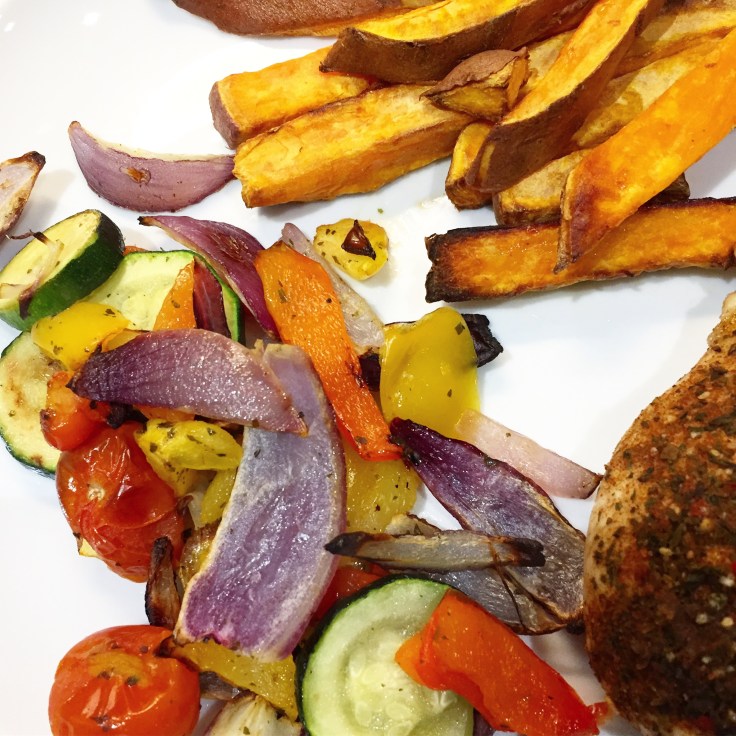
I then use myfitnesspal to track all the food I eat, and this then gives me a breakdown of the macros in each food, and a total for the day. Their database of food is huge, you can scan barcodes to give you the nutritional information pre-loaded, and it will also give you the percentage breakdown of your diet for that day. I can’t stress how useful this is, and it allows you to plan your food for the day ahead, knowing your going to hit your macros, or at least be close to them, realistically it’s rare it’s spot on!
You will probably see the term ‘IIFYM’ around, which is an abbreviation of ‘If It Fits Your Macros’. This basically means eating whatever you want, as long as it fits in the limits you have set yourself. This essentially can work, the science behind it revolves around the numbers, and not the food itself, hence I personally did find it hard at one point to NOT see food purely as numbers, but from a health perspective is not the best. I would always advise trying to ‘eat clean’ as often as possible, this does not mean gluten free, dairy free, soya, paleo everything, but just eating fresh, healthy food, and avoiding refined sugars and processed foods.
Trust me, I completely understand that it is impossible to always eat this way for a whole world of reasons, and that’s okay, I don’t cook as much as I should myself, I just don’t enjoy it so I do what I can, and a cheat day or a ready meal one night isn’t going to destroy all the work you’ve done, don’t worry, you can only do your best and work with the situation you are presented with, it is all about doing what you can, as consistently as you can.
After a few years of struggling massively with my diet, one thing I will say is always try and take enjoyment from food, always eat foods you like, have a cheat day if you feel like you need/want one and enjoy it, don’t worry about the macros on those days, I love my food and I will always allow myself to eat the foods I’m craving, the more you stop yourself, the more you’ll crave it, which will only lead to unhappiness and stress, and a massive binge, I’ve been there! Tracking should never stop you from doing things with friends or family, or living the life you want to!
Happy eating, and happy tracking!
X
 PHOEBEWALSH.COM
Leave a comment